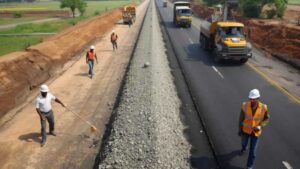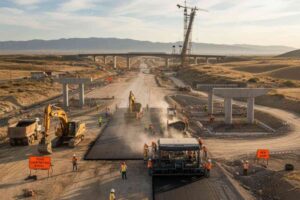
The impact of the Iran conflict is already visible across infrastructure projects, particularly in how work is being executed on the ground. Fuel costs have moved up, affecting everything from equipment to transportation to materials such as bitumen. At the same time, movement of goods through the region has become less reliable. Shipping routes are under pressure, and even where materials continue to move, they are taking longer and costing more to reach project sites. What is now becoming more significant is how these disruptions are translating into contractual stress.
In many cases, the conflict qualifies as a force majeure (FM) event, and contractors and suppliers are likely to have issued notices to safeguard themselves against delay or non-performance penalties. However, while FM typically provides relief from timelines, it does not always allow for recovery of additional costs.
This creates a critical imbalance. While contractors may be protected from delay-related liabilities, they are still exposed to rising input costs, particularly in transportation and logistics. Insurance adds another layer of complexity. War-risk exclusions are standard in many policies, and recent developments have already seen insurers reluctant to cover shipments through sensitive routes such as the Strait of Hormuz.
As a result, contractors and suppliers are increasingly bearing costs that were not anticipated at the time of contracting.
This is where the situation begins to move beyond delays into more fundamental risks. If cost escalations become unsustainable, parties may begin to explore more extreme contractual remedies, including suspension or even termination.
Alongside this, the broader economic context continues to evolve. Countries dependent on imported energy are facing higher costs, which can influence public spending priorities and delay infrastructure investments. While oil-exporting economies have, until now, benefited from higher revenues, recent escalations are introducing uncertainty even in these markets.
What stands out is the convergence of multiple pressures such as cost escalation, supply chain disruption, contractual strain, and execution challenges, all occurring simultaneously.
For infrastructure companies, this changes how projects are approached. Planning requires greater flexibility, procurement strategies must account for disruption, and contractual provisions are being examined far more closely than before. Timelines are increasingly difficult to fix, and assumptions that once held steady are now being tested.
This does not halt infrastructure development, but it does make delivery significantly more complex. For now, that is the reality the sector is navigating.